
How AI Is Transforming Procurement Operations Beyond Spend Analytics in 2026
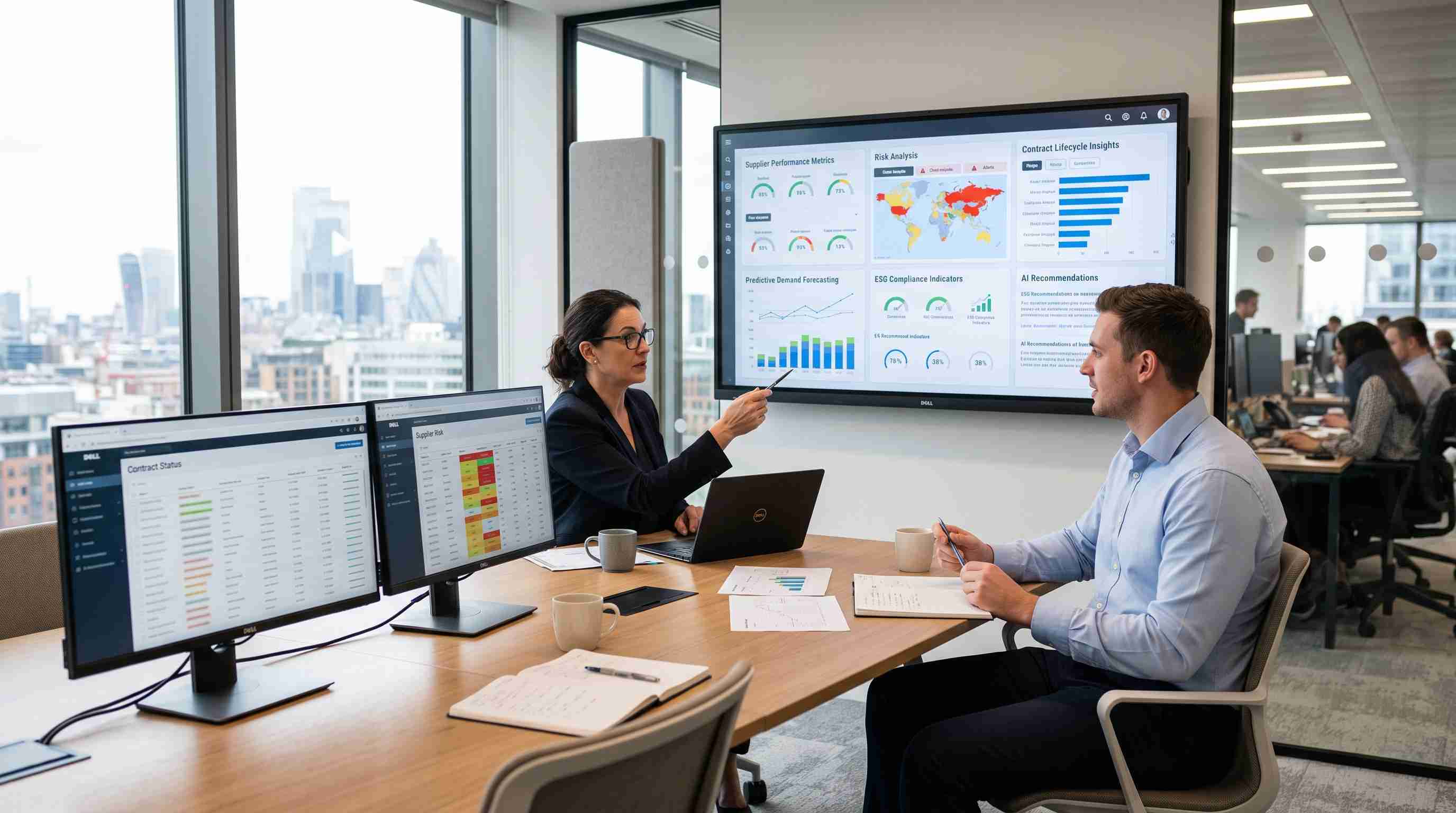
Over 64% of procurement leaders expect AI to fundamentally reshape procurement operations within the next few years. Yet many organisations still use AI primarily for spend visibility and reporting.
While spend analytics remains valuable, it represents only a small fraction of what modern AI can deliver. Today, AI is helping procurement teams automate approvals, evaluate tenders, identify supplier risks, manage contracts, improve compliance, and uncover savings opportunities that would otherwise remain hidden. The conversation has shifted from understanding spend to accelerating procurement transformation across the entire lifecycle.
It is especially significant for GCC organisations that have been experiencing tremendous pressure from investors, governments, and consumers to boost efficiency, resilience, sustainability, and governance. AI has now become a strategic capability. So, let us get into the details - how AI is revolutionizing procurement operations apart from spend analysis in 2026.
What Is AI in Procurement?
Artificial Intelligence (AI) in procurement refers to the use of machine learning, predictive analytics, natural language processing, and generative AI technologies to automate tasks and analyse procurement data. As organisations invest in digital procurement, AI is becoming a critical capability for improving visibility, efficiency, and decision-making. Some prevalent uses of AI in procurement are:
Spend analysis
Supplier risk monitoring
Contract management
Tender evaluation
Invoice processing
Demand forecasting
Sustainability reporting
AI in Procurement Has Moved On, Has Your Organisation?
A few years ago, the big conversation around AI in procurement was spend visibility. Finally, a way to see where money was going, which categories were out of control, and which suppliers were getting more than their share. That was genuinely useful. But spend analytics was the entry point. Not the destination.
The organisations extracting real value from AI today are using it to transform how procurement operates from the way tenders get evaluated to how contracts are managed, how supplier risks get spotted, and how procurement teams spend their time. Most GCC procurement functions are still at the starting line. They have dashboards but do not have the operational transformation. That gap is widening every year.
From Dashboards to Decisions: What AI Actually Does Now?
The best way to understand where AI is going in procurement is to look at what it is already doing in the organisations ahead of the curve. It is targeted at applications, each one removing a specific bottleneck. Here is where AI is delivering the most impact right now:
Automating Low-Value Approvals
Procurement teams spend a surprising amount of time processing routine purchase orders, chasing approvals, and managing low-value transactions that follow predictable patterns.
AI handles this automatically. It routes requests, checks them against policy, flags exceptions, and approves or escalates without anyone in the team touching it. The time recovered is not small. In large procurement functions, automating routine approvals can free up team capacity that was previously absorbed by administrative work. That time does not disappear. But, it gets redirected to supplier strategy, negotiation, and category management, the work that actually builds procurement value.
Spotting Supplier Risk Before It Becomes a Problem
Traditional supplier risk management is reactive. Something goes wrong, the team investigates, and a lesson gets documented for the next review cycle. By that point, the damage is done.
AI changes the timeline. It monitors supplier financial health, news signals, geopolitical events, regulatory changes, and delivery performance simultaneously across hundreds of suppliers at once. When a risk pattern emerges, it surfaces early. The procurement team sees it in time to act, not in time to respond. For GCC organisations managing complex, multi-tier supply chains across global markets, this is not a nice-to-have. It is operational resilience built into the procurement function, a key driver of supply chain resilience in an increasingly uncertain business environment.
Transforming How Tenders Get Evaluated
Evaluating tenders manually is slow, inconsistent, and open to human error. Large infrastructure tenders in particular can involve hundreds of pages of supplier submissions, evaluated by teams under time pressure. The efficiency gains are real. So are the governance benefits. AI-assisted evaluation creates an audit trail that manual processes cannot match. AI-assisted tender evaluation changes this significantly:
AI Capability | Practical Impact |
Scans and analyses all submissions consistently | No supplier gets more or less scrutiny based on evaluator fatigue |
Scores against pre-defined criteria automatically | Evaluation is faster and more defensible |
Flags missing information or non-compliant submissions | Issues surface early, not after the award |
Detects anomalies across bidder submissions | Procurement integrity risks get caught before they become incidents |
One important caveat: AI does not replace human judgment in tender evaluation. It removes the administrative burden and surfaces the information that makes human judgment better. The decision still belongs to procurement. |
Managing Contracts Across Their Full Lifecycle
Contract management is one of the most underestimated sources of value leakage in procurement. Renewal dates missed. Obligations untracked. Price escalation clauses that trigger quietly. Non-standard terms that nobody noticed at signature. AI contract intelligence fixes this at scale:
Clause extraction: Identifies non-standard terms and flags deviations from approved language automatically
Obligation tracking: Monitors every active commitment across every contract, without manual input
Renewal and expiry alerts: Surfaces contract windows before they close, so renegotiation happens on your terms
Risk flagging: Identifies commercial and compliance exposure across the contract portfolio in real time
How AI Improves Tail Spend Management and Compliance
Every procurement leader knows the challenge. A small number of high-value suppliers get most of the attention. The long tail of low-value, high-volume transactions often represents 20% of spend but 80% of transaction volume gets managed inconsistently, if at all. AI spend intelligence works through this volume automatically.
It classifies transactions, identifies patterns, flags policy breaches, and surfaces consolidation opportunities continuously, not in an annual audit.
Organisations using AI for tail spend management typically recover previously unmanaged spend value.
That is money already in the organisation's budget. AI finds it. This creates immediate opportunities for savings and improved compliance.
What Does This Mean for Procurement Teams?
There is an understandable anxiety in some procurement teams about what AI means for the people doing the work. It is worth being direct about this. Procurement professionals who understand how to work with AI tools, interrogate the outputs, and apply commercial judgment to AI-generated insights will be significantly more effective than those who do not. That is a capability investment organisations need to make now, not after the tools are already deployed.
AI does not reduce the need for skilled procurement professionals. It reduces the need for skilled procurement professionals to spend their time on work that does not require their skills.
The procurement leader who spent days processing routine approvals and chasing contract renewal dates can now spend it on supplier negotiations and category strategy.
The analyst who built spend reports manually can now interpret AI-generated insights and translate them into commercial decisions.
The function does not shrink. It gets better at the things that actually create value.
The Governance Question Nobody Is Asking Loudly Enough
AI in procurement carries risks that most organisations are not managing properly. As AI adoption grows, effective procurement risk management becomes essential to ensure transparency, compliance, and accountability across procurement operations. Before deploying AI across procurement workflows, organisations need clear answers to four questions:
Can every AI-assisted decision be audited and explained? If not, the organisation has a procurement integrity exposure it has not priced.
Has the AI been tested for bias? Supplier scoring models trained on historical data can systematically disadvantage certain supplier profiles often without anyone realising it.
Who owns accountability when an AI recommendation leads to a poor outcome? The answer cannot be "the system." It has to be a person with a job title.
Are data flows compliant with GCC digital regulations? Supplier data aggregated in AI platforms crosses regulatory boundaries that are evolving rapidly across the region.
Future Trends Shaping AI-Powered Procurement
Several emerging technologies will shape procurement over the next five years. These capabilities will redefine procurement performance expectations across industries.
Agentic AI: AI agents capable of managing complex procurement workflows with minimal human intervention.
Predictive Procurement: Advanced forecasting of demand, supplier performance, and market disruptions.
Autonomous Sourcing: AI-supported supplier identification, qualification, and recommendation.
Digital Procurement Twins: Virtual models used to test procurement decisions and simulate outcomes.
Real-Time Supply Chain Intelligence: Continuous monitoring across supplier ecosystems for immediate risk visibility.
Addressing these opportunities and risks requires more than technology investment. It demands a structured implementation approach. |
How Sourcing Connections Helps Procurement Teams Use AI Effectively
AI governance is not an IT responsibility. It is a procurement leadership responsibility. Most organisations know they need to move faster on AI in procurement. The challenge is knowing where to start, how to prioritise, and how to build the governance that makes AI deployment sustainable rather than risky. This is where experienced procurement consulting support like Sourcing Connections can help organisations prioritise initiatives, reduce risk, and accelerate value creation.
AI Readiness Assessment
Before recommending any technology, we assess where your procurement function is today, the maturity of your data infrastructure, the quality of your process documentation, the readiness of your team, and the governance frameworks you will need before AI can operate effectively. This gives you a realistic picture of what is achievable and in what sequence.
Process Redesign Before Technology Deployment
Deploying AI on top of broken processes does not fix the processes. It accelerates them. We work with procurement teams to redesign the workflows that AI will support so the technology lands in a function ready to use it, not one that needs fixing afterward.
Building AI Governance Frameworks for GCC Contexts
GCC procurement operates within a specific regulatory and commercial environment. The AI governance frameworks we build are designed for that environment covering auditability requirements, data privacy obligations, supplier fairness standards, and the accountability structures that GCC organisations need in place before AI goes live in their procurement operations.
The goal is not AI for its own sake. It is a procurement function that operates smarter, moves faster, and delivers better commercial and sustainability outcomes because the right tools are in the right hands, governed properly. |
Ready to Build an AI-Powered Procurement Function!
AI is not coming to GCC procurement. It is already here. The question is whether your organisation is using it strategically or leaving most of its capability untouched. Spend analytics was the starting point. The operational transformation - smarter approvals, earlier risk signals, better tender governance, tighter contract management is where the real value sits.
The procurement functions that build this capability now will operate at a different level from those who treat AI as a reporting upgrade. That gap will matter commercially, operationally, competitively and sooner than most organisations expect.
Sourcing Connections has worked with procurement teams across the GCC on exactly these challenges from assessing where AI can realistically add value in your function today, to redesigning the processes that need to work before any technology goes live, to building the governance frameworks that keep AI deployment clean and defensible. If you want an honest picture of where your procurement function stands and what the smartest next step looks like, talk to our team.
FAQs
What are the key benefits of integrating AI into procurement processes?
AI improves efficiency, reduces manual work, strengthens compliance, enhances decision-making, and uncovers savings opportunities.
How can AI improve supplier risk assessment in procurement?
AI analyses supplier data, market signals, and performance trends to identify potential risks before they escalate.
How can AI improve supplier risk management in a global supply chain?
AI tools continuously monitor geopolitical events, financial health, and delivery performance, helping teams respond proactively to disruptions.
What steps are involved in implementing an AI-powered procurement system?
Start with an AI readiness assessment, redesign processes, establish governance, prepare data, and then deploy the technology in phases.
Will AI replace procurement professionals?
No, AI will not replace procurement professionals. AI automates repetitive tasks, while procurement professionals continue to lead strategy, negotiations, and decision-making.
Over 64% of procurement leaders expect AI to fundamentally reshape procurement operations within the next few years. Yet many organisations still use AI primarily for spend visibility and reporting.
While spend analytics remains valuable, it represents only a small fraction of what modern AI can deliver. Today, AI is helping procurement teams automate approvals, evaluate tenders, identify supplier risks, manage contracts, improve compliance, and uncover savings opportunities that would otherwise remain hidden. The conversation has shifted from understanding spend to accelerating procurement transformation across the entire lifecycle.
It is especially significant for GCC organisations that have been experiencing tremendous pressure from investors, governments, and consumers to boost efficiency, resilience, sustainability, and governance. AI has now become a strategic capability. So, let us get into the details - how AI is revolutionizing procurement operations apart from spend analysis in 2026.
What Is AI in Procurement?
Artificial Intelligence (AI) in procurement refers to the use of machine learning, predictive analytics, natural language processing, and generative AI technologies to automate tasks and analyse procurement data. As organisations invest in digital procurement, AI is becoming a critical capability for improving visibility, efficiency, and decision-making. Some prevalent uses of AI in procurement are:
Spend analysis
Supplier risk monitoring
Contract management
Tender evaluation
Invoice processing
Demand forecasting
Sustainability reporting
AI in Procurement Has Moved On, Has Your Organisation?
A few years ago, the big conversation around AI in procurement was spend visibility. Finally, a way to see where money was going, which categories were out of control, and which suppliers were getting more than their share. That was genuinely useful. But spend analytics was the entry point. Not the destination.
The organisations extracting real value from AI today are using it to transform how procurement operates from the way tenders get evaluated to how contracts are managed, how supplier risks get spotted, and how procurement teams spend their time. Most GCC procurement functions are still at the starting line. They have dashboards but do not have the operational transformation. That gap is widening every year.
From Dashboards to Decisions: What AI Actually Does Now?
The best way to understand where AI is going in procurement is to look at what it is already doing in the organisations ahead of the curve. It is targeted at applications, each one removing a specific bottleneck. Here is where AI is delivering the most impact right now:
Automating Low-Value Approvals
Procurement teams spend a surprising amount of time processing routine purchase orders, chasing approvals, and managing low-value transactions that follow predictable patterns.
AI handles this automatically. It routes requests, checks them against policy, flags exceptions, and approves or escalates without anyone in the team touching it. The time recovered is not small. In large procurement functions, automating routine approvals can free up team capacity that was previously absorbed by administrative work. That time does not disappear. But, it gets redirected to supplier strategy, negotiation, and category management, the work that actually builds procurement value.
Spotting Supplier Risk Before It Becomes a Problem
Traditional supplier risk management is reactive. Something goes wrong, the team investigates, and a lesson gets documented for the next review cycle. By that point, the damage is done.
AI changes the timeline. It monitors supplier financial health, news signals, geopolitical events, regulatory changes, and delivery performance simultaneously across hundreds of suppliers at once. When a risk pattern emerges, it surfaces early. The procurement team sees it in time to act, not in time to respond. For GCC organisations managing complex, multi-tier supply chains across global markets, this is not a nice-to-have. It is operational resilience built into the procurement function, a key driver of supply chain resilience in an increasingly uncertain business environment.
Transforming How Tenders Get Evaluated
Evaluating tenders manually is slow, inconsistent, and open to human error. Large infrastructure tenders in particular can involve hundreds of pages of supplier submissions, evaluated by teams under time pressure. The efficiency gains are real. So are the governance benefits. AI-assisted evaluation creates an audit trail that manual processes cannot match. AI-assisted tender evaluation changes this significantly:
AI Capability | Practical Impact |
Scans and analyses all submissions consistently | No supplier gets more or less scrutiny based on evaluator fatigue |
Scores against pre-defined criteria automatically | Evaluation is faster and more defensible |
Flags missing information or non-compliant submissions | Issues surface early, not after the award |
Detects anomalies across bidder submissions | Procurement integrity risks get caught before they become incidents |
One important caveat: AI does not replace human judgment in tender evaluation. It removes the administrative burden and surfaces the information that makes human judgment better. The decision still belongs to procurement. |
Managing Contracts Across Their Full Lifecycle
Contract management is one of the most underestimated sources of value leakage in procurement. Renewal dates missed. Obligations untracked. Price escalation clauses that trigger quietly. Non-standard terms that nobody noticed at signature. AI contract intelligence fixes this at scale:
Clause extraction: Identifies non-standard terms and flags deviations from approved language automatically
Obligation tracking: Monitors every active commitment across every contract, without manual input
Renewal and expiry alerts: Surfaces contract windows before they close, so renegotiation happens on your terms
Risk flagging: Identifies commercial and compliance exposure across the contract portfolio in real time
How AI Improves Tail Spend Management and Compliance
Every procurement leader knows the challenge. A small number of high-value suppliers get most of the attention. The long tail of low-value, high-volume transactions often represents 20% of spend but 80% of transaction volume gets managed inconsistently, if at all. AI spend intelligence works through this volume automatically.
It classifies transactions, identifies patterns, flags policy breaches, and surfaces consolidation opportunities continuously, not in an annual audit.
Organisations using AI for tail spend management typically recover previously unmanaged spend value.
That is money already in the organisation's budget. AI finds it. This creates immediate opportunities for savings and improved compliance.
What Does This Mean for Procurement Teams?
There is an understandable anxiety in some procurement teams about what AI means for the people doing the work. It is worth being direct about this. Procurement professionals who understand how to work with AI tools, interrogate the outputs, and apply commercial judgment to AI-generated insights will be significantly more effective than those who do not. That is a capability investment organisations need to make now, not after the tools are already deployed.
AI does not reduce the need for skilled procurement professionals. It reduces the need for skilled procurement professionals to spend their time on work that does not require their skills.
The procurement leader who spent days processing routine approvals and chasing contract renewal dates can now spend it on supplier negotiations and category strategy.
The analyst who built spend reports manually can now interpret AI-generated insights and translate them into commercial decisions.
The function does not shrink. It gets better at the things that actually create value.
The Governance Question Nobody Is Asking Loudly Enough
AI in procurement carries risks that most organisations are not managing properly. As AI adoption grows, effective procurement risk management becomes essential to ensure transparency, compliance, and accountability across procurement operations. Before deploying AI across procurement workflows, organisations need clear answers to four questions:
Can every AI-assisted decision be audited and explained? If not, the organisation has a procurement integrity exposure it has not priced.
Has the AI been tested for bias? Supplier scoring models trained on historical data can systematically disadvantage certain supplier profiles often without anyone realising it.
Who owns accountability when an AI recommendation leads to a poor outcome? The answer cannot be "the system." It has to be a person with a job title.
Are data flows compliant with GCC digital regulations? Supplier data aggregated in AI platforms crosses regulatory boundaries that are evolving rapidly across the region.
Future Trends Shaping AI-Powered Procurement
Several emerging technologies will shape procurement over the next five years. These capabilities will redefine procurement performance expectations across industries.
Agentic AI: AI agents capable of managing complex procurement workflows with minimal human intervention.
Predictive Procurement: Advanced forecasting of demand, supplier performance, and market disruptions.
Autonomous Sourcing: AI-supported supplier identification, qualification, and recommendation.
Digital Procurement Twins: Virtual models used to test procurement decisions and simulate outcomes.
Real-Time Supply Chain Intelligence: Continuous monitoring across supplier ecosystems for immediate risk visibility.
Addressing these opportunities and risks requires more than technology investment. It demands a structured implementation approach. |
How Sourcing Connections Helps Procurement Teams Use AI Effectively
AI governance is not an IT responsibility. It is a procurement leadership responsibility. Most organisations know they need to move faster on AI in procurement. The challenge is knowing where to start, how to prioritise, and how to build the governance that makes AI deployment sustainable rather than risky. This is where experienced procurement consulting support like Sourcing Connections can help organisations prioritise initiatives, reduce risk, and accelerate value creation.
AI Readiness Assessment
Before recommending any technology, we assess where your procurement function is today, the maturity of your data infrastructure, the quality of your process documentation, the readiness of your team, and the governance frameworks you will need before AI can operate effectively. This gives you a realistic picture of what is achievable and in what sequence.
Process Redesign Before Technology Deployment
Deploying AI on top of broken processes does not fix the processes. It accelerates them. We work with procurement teams to redesign the workflows that AI will support so the technology lands in a function ready to use it, not one that needs fixing afterward.
Building AI Governance Frameworks for GCC Contexts
GCC procurement operates within a specific regulatory and commercial environment. The AI governance frameworks we build are designed for that environment covering auditability requirements, data privacy obligations, supplier fairness standards, and the accountability structures that GCC organisations need in place before AI goes live in their procurement operations.
The goal is not AI for its own sake. It is a procurement function that operates smarter, moves faster, and delivers better commercial and sustainability outcomes because the right tools are in the right hands, governed properly. |
Ready to Build an AI-Powered Procurement Function!
AI is not coming to GCC procurement. It is already here. The question is whether your organisation is using it strategically or leaving most of its capability untouched. Spend analytics was the starting point. The operational transformation - smarter approvals, earlier risk signals, better tender governance, tighter contract management is where the real value sits.
The procurement functions that build this capability now will operate at a different level from those who treat AI as a reporting upgrade. That gap will matter commercially, operationally, competitively and sooner than most organisations expect.
Sourcing Connections has worked with procurement teams across the GCC on exactly these challenges from assessing where AI can realistically add value in your function today, to redesigning the processes that need to work before any technology goes live, to building the governance frameworks that keep AI deployment clean and defensible. If you want an honest picture of where your procurement function stands and what the smartest next step looks like, talk to our team.
FAQs
What are the key benefits of integrating AI into procurement processes?
AI improves efficiency, reduces manual work, strengthens compliance, enhances decision-making, and uncovers savings opportunities.
How can AI improve supplier risk assessment in procurement?
AI analyses supplier data, market signals, and performance trends to identify potential risks before they escalate.
How can AI improve supplier risk management in a global supply chain?
AI tools continuously monitor geopolitical events, financial health, and delivery performance, helping teams respond proactively to disruptions.
What steps are involved in implementing an AI-powered procurement system?
Start with an AI readiness assessment, redesign processes, establish governance, prepare data, and then deploy the technology in phases.
Will AI replace procurement professionals?
No, AI will not replace procurement professionals. AI automates repetitive tasks, while procurement professionals continue to lead strategy, negotiations, and decision-making.


